DooDooLamb News
Gene Solutions Announces Strategic Entry into Türkiye with Robust Real-World Evidence at the 2nd International Hereditary Cancers Congress 2026
Brief published March 5, 2026 · Original source published March 4, 2026
Original reporting at prnewswire.co.uk.
Automated brief. Verify important details at the original source.
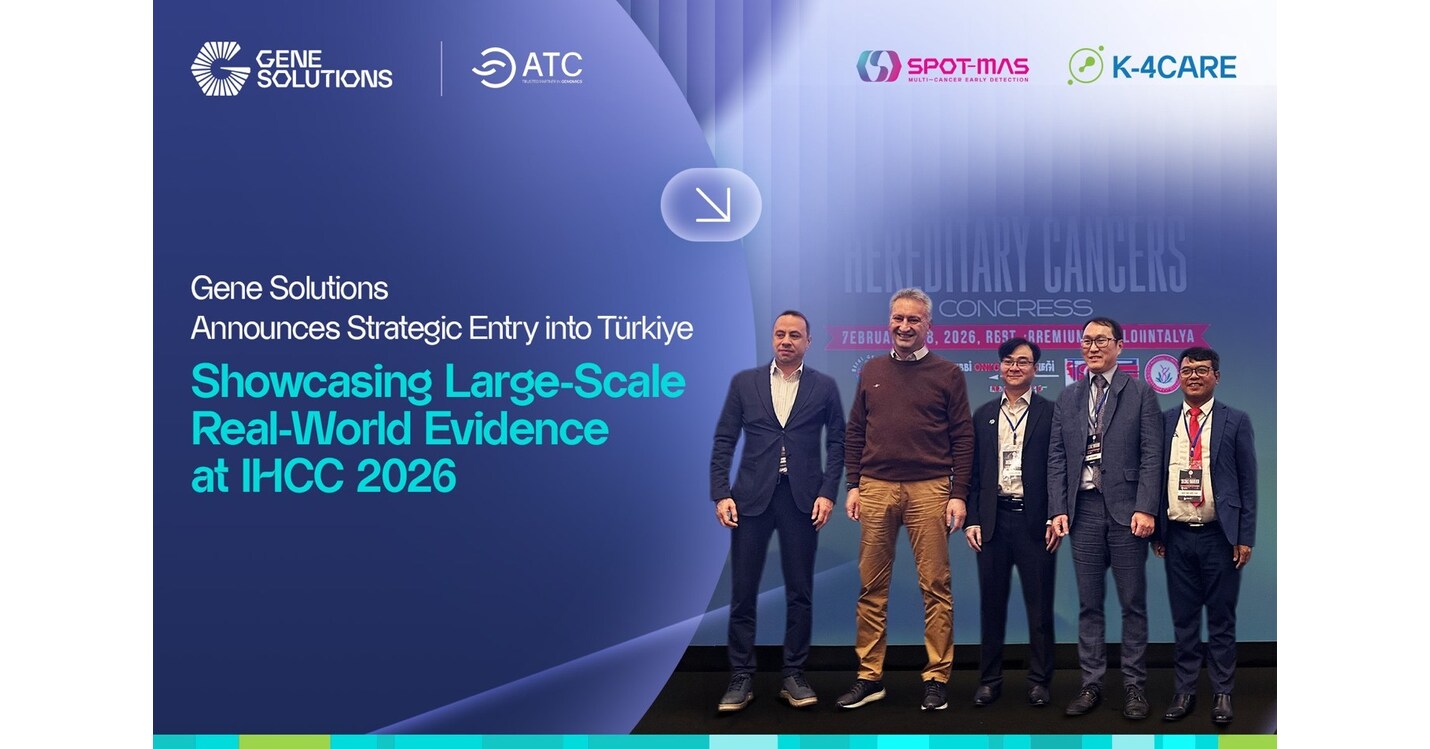
Gene Solutions Crashes Turkish Cancer Conference with 12,000 Data Points and Dreams of AI Glory
A biotech company you've never heard of just announced they're "strategically entering" Turkey by showing up at a medical conference with a PowerPoint deck and 12,281 patient records. In the world of life sciences marketing, this apparently counts as a major international expansion.
Gene Solutions, working with partner ATC Genomics (because nothing says credibility like a three-letter acronym), descended upon the 2nd International Hereditary Cancers Congress 2026 in what can only be described as the medical equivalent of a startup demo day. Their big reveal? They've collected data from over 12,000 patients and fed it into an AI system that claims it can detect multiple types of cancer early. The audience of oncologists and researchers politely applauded while internally calculating whether this was actually impressive or just a really expensive way to announce "we have Excel spreadsheets."
The company's pitch centers around something called Multi-Cancer Early Detection, or MCED for those who enjoy turning medical breakthroughs into acronyms that sound like government agencies. The technology works by analyzing circulating tumor DNA (ctDNA) in blood samples, which is genuinely clever science wrapped in the kind of marketing speak that makes venture capitalists reach for their checkbooks. Essentially, when cancer cells die, they release tiny fragments of their DNA into the bloodstream, like biological breadcrumbs that AI algorithms can theoretically learn to recognize before tumors become large enough to show up on traditional scans.
What makes this announcement particularly rich is the timing and location. The company chose Turkey as their launch pad, presumably because nothing says "global healthcare revolution" quite like announcing your AI cancer detector at a conference in Ankara. The Turkish medical market represents a fascinating middle ground between developed and emerging economies, with a healthcare system sophisticated enough to appreciate advanced diagnostics but cost-conscious enough to actually need them. It's also notably less crowded with competitors than Silicon Valley or Boston, where every coffee shop probably has at least two cancer detection startups working out of it.
Gene Solutions presented their "clinically validated ctDNA-powered oncology portfolio," which translates from corporate speak as "we've tested our blood test on actual patients and sometimes it works." The 12,281-patient dataset they're touting represents years of sample collection across multiple cancer types, geographic regions, and demographic groups. For context, this is genuinely substantial in the world of medical research, where studies with a few hundred participants often make headlines. The challenge, as anyone who's worked with real-world medical data knows, is that having lots of numbers doesn't automatically translate to clinical utility (though it does translate to impressive slide decks).
The AI component of their technology presumably uses machine learning algorithms trained on this vast dataset to identify cancer-specific patterns in ctDNA fragments. This involves the kind of computational heavy lifting that sounds impressive in press releases but relies on the messy reality that biological systems don't always cooperate with statistical models. Cancer is notoriously heterogeneous, meaning that what works for detecting lung cancer in Turkish patients might not work for pancreatic cancer in Korean patients, despite what the marketing materials suggest.
The partnership with ATC Genomics adds another layer to this corporate theater. These kinds of strategic alliances are common in biotech, where companies with complementary capabilities team up to tackle markets neither could handle alone. ATC likely brings local regulatory knowledge and clinical relationships, while Gene Solutions contributes the AI platform and that precious dataset. It's a sensible arrangement that gets dressed up in press release language about "synergistic partnerships" and "complementary core competencies."
Here's what this actually means for the people who might someday encounter this technology: maybe nothing, maybe everything. Early cancer detection is genuinely one of the most important problems in medicine, and liquid biopsy approaches like ctDNA analysis represent a legitimate path forward. The challenge is separating the real science from the inevitable hype cycle that surrounds anything involving both AI and cancer. If Gene Solutions has truly cracked the code on multi-cancer detection, they'll save lives and make billions. If they've simply gotten very good at turning patient data into investor presentations, they'll join the long list of biotech companies that promised the future and delivered expensive disappointment.
The Turkish announcement feels like a calculated move to establish credibility in a market where they can be a bigger fish in a smaller pond. It's easier to be the cutting-edge AI cancer detection company in Ankara than it is in Boston, where Grail, Guardant Health, and a dozen other well-funded competitors are already fighting for market share. Plus, international expansion announcements always play well with investors who want to believe they're backing the next global healthcare platform.
What remains to be seen is whether Gene Solutions can deliver on the promise embedded in all those data points and AI algorithms. The distance between "clinically validated" and "actually useful in practice" is littered with the remains of promising biotech companies that confused statistical significance with clinical relevance. But hey, at least they picked a conference with good Turkish coffee to make their pitch.