DooDooLamb News
Fintech firm Block to cut nearly half its workforce as founder Jack Dorsey cites shift to AI
Brief published March 2, 2026 · Original source published March 1, 2026
Original reporting by Laura Harris at naturalnews.com.
Automated brief. Verify important details at the original source.
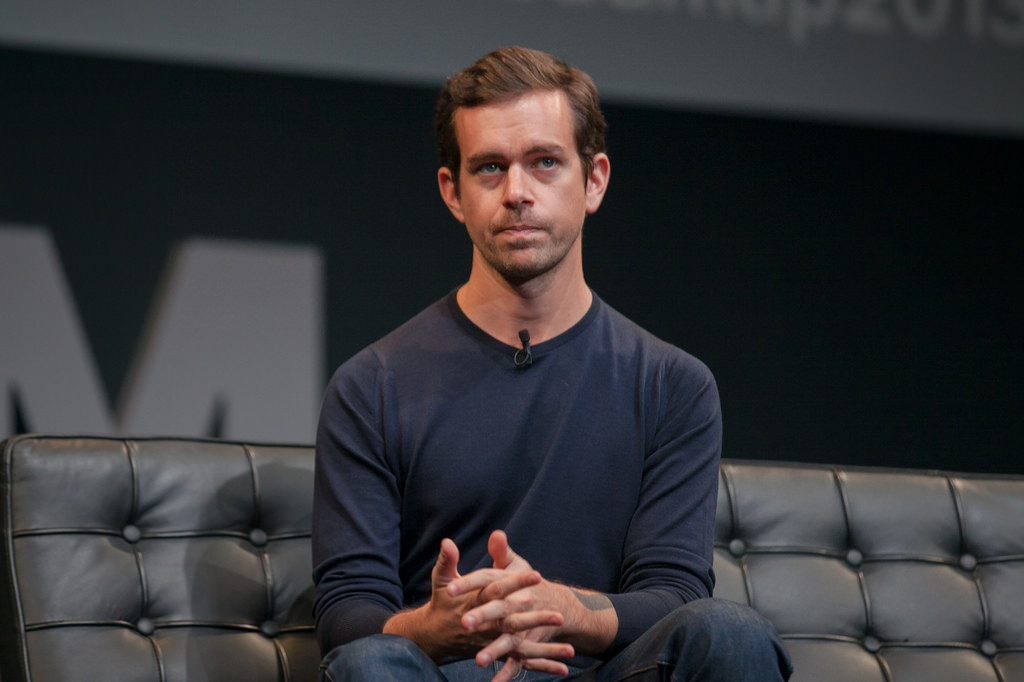
Block Lays Off Half Its Staff Because AI Can Apparently Run Square Card Readers Now
Jack Dorsey has discovered that artificial intelligence can replace nearly half of his fintech workforce, a revelation that comes roughly six months after every other tech CEO had the exact same epiphany while staring at their quarterly expense reports.
Block Inc., the company formerly known as Square back when it had a coherent brand identity, announced it's cutting 4,000 jobs in what Dorsey characterizes as a strategic pivot to "AI-driven operations." The move shrinks Block's workforce from over 10,000 employees to under 6,000, which coincidentally happens to be the exact headcount where the math on "AI efficiency gains" starts looking really compelling to venture capital firms asking uncomfortable questions about burn rates.
Dorsey, who has spent the last few years bouncing between Twitter drama and crypto evangelism like a pinball with commitment issues, claims this isn't about financial distress. Instead, he's framing it as Block's natural evolution toward becoming an AI-first company. Because nothing says "cutting-edge artificial intelligence" quite like laying off the humans who actually understand how your payment processing infrastructure works.
The timing is particularly rich. Block's announcement comes during a period when literally every tech company has discovered that their workforce was mysteriously 30-50% larger than necessary, a realization that apparently struck the entire industry simultaneously in late 2022. It's almost as if there was some kind of coordinated awakening where CEOs across Silicon Valley looked around their open-plan offices and thought, "You know what? ChatGPT could probably handle customer support."
Block's core business revolves around those ubiquitous white Square card readers that every coffee shop and farmer's market vendor uses to separate you from your money. The company also runs Cash App, a peer-to-peer payment service that's become the primary way people split dinner bills and pay their drug dealers (though Block's PR team prefers to focus on the dinner bill use case). Exactly how artificial intelligence is going to revolutionize the process of swiping a credit card through a plastic dongle remains delightfully vague in Block's public statements.
The announcement follows the classic Silicon Valley playbook for workforce reductions: frame massive layoffs as strategic innovation rather than cost-cutting. Instead of admitting that maybe hiring 10,000 people to run what is essentially a more convenient cash register was overkill, Dorsey gets to position himself as a visionary leader shepherding his company into the AI future. It's the corporate equivalent of Marie Kondo'ing your employee base, except instead of asking whether each worker "sparks joy," you're asking whether they can be replaced by a large language model.
What makes this particularly entertaining is Block's recent history of ambitious pivots. The company rebranded from Square to Block in 2021 as part of Dorsey's grand vision to become a blockchain-focused ecosystem company. That rebrand cost millions and confused basically everyone who wasn't already confused by why Jack Dorsey was running two public companies simultaneously. Now, barely two years later, Block is pivoting again, this time to AI, because apparently blockchain wasn't the paradigm shift it was cracked up to be.
The AI pivot also raises some delicious questions about what exactly Block thinks artificial intelligence can do for a payment processing company. Are they planning to replace customer service with chatbots that apologize for transaction failures in increasingly creative ways? Will machine learning algorithms optimize the beeping sounds their card readers make? Perhaps they're developing AI that can automatically detect when a small business owner is about to give up on modern commerce and return to cash-only operations.
Dorsey's explanation for the layoffs centers on Block becoming "more efficient" through AI integration, which is executive-speak for "we're going to see if computers can do these jobs for cheaper." The company plans to automate various operational functions, presumably including some that require the kind of nuanced human judgment that current AI systems handle about as well as a toddler handles a chainsaw.
The reality check here is both simpler and more complex than Block's AI narrative suggests. On the simple side, the company is almost certainly cutting costs because growth has slowed and investors are demanding profitability over expansion. The fintech boom of the early 2020s has cooled considerably, and companies that expanded rapidly during the everything-goes-up era are now discovering what "sustainable growth" actually means.
On the complex side, Block actually might benefit from some AI integration, particularly in fraud detection and risk assessment. Payment processing generates enormous amounts of data, and machine learning systems can spot suspicious transaction patterns faster than human analysts. The question is whether those legitimate use cases justify laying off 4,000 people, or whether Block is using "AI transformation" as cover for a more mundane financial restructuring.
For the thousands of Block employees now updating their LinkedIn profiles, this represents another data point in the ongoing experiment of whether AI can actually replace human workers at scale, or whether tech companies are just really good at convincing themselves that expensive software is cheaper than experienced staff. The answer will probably emerge over the next year as Block either becomes a lean, AI-powered fintech machine or discovers that running a payment processing company requires more human insight than a spreadsheet can capture.
Either way, Jack Dorsey gets to add "AI visionary" to his resume, right next to "Twitter destroyer" and "blockchain enthusiast," proving once again that in Silicon Valley, there's no pivoting away from your problems quite like pivoting toward the next big thing.