DooDooLamb News
A pledge for power, but a thirst unquenched: Tech’s data center dilemma
Brief published March 1, 2026 · Original source published February 28, 2026
Original reporting by Willow Tohi at naturalnews.com.
Automated brief. Verify important details at the original source.
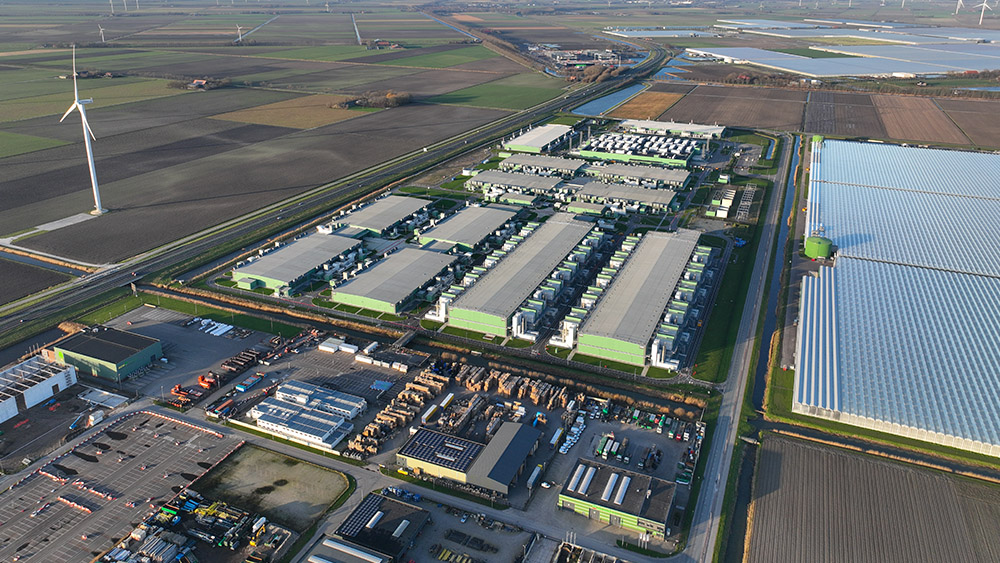
Tech Giants Promise to Stop Stealing Your Electricity While Building AI Fortresses
In a stunning display of corporate responsibility that definitely won't backfire, major tech companies are heading to the White House next week to pinky-swear they'll generate their own power for their massive AI data centers instead of quietly jacking up everyone else's electric bills. Because nothing says "we've got this under control" quite like needing the President to witness your solemn vow not to be energy vampires.
The "Rate Payer Protection Pledge" reads like something a teenager would sign after getting caught sneaking out: yes, we promise to be good, and no, we definitely won't find creative ways around this later. The timing is particularly rich, coming just as Americans are starting to notice their power bills climbing faster than OpenAI's valuation, and asking uncomfortable questions about why their local grid is groaning under the weight of computers trying to figure out whether a hot dog is a sandwich.
This whole spectacle stems from tech's latest gold rush problem: AI models are basically digital blast furnaces that consume electricity like a small country with commitment issues. Training GPT-4 reportedly used about 50 gigawatt-hours of electricity, roughly equivalent to powering 5,000 homes for an entire year, just to teach a computer to write poetry and occasionally hallucinate facts about historical events. Now multiply that by every tech company desperately trying to build their own ChatGPT killer, and you start to understand why your local utility company is looking at data centers the way a parent looks at teenagers at an all-you-can-eat buffet.
The pledge comes after months of increasingly awkward conversations between tech companies and local governments, conversations that typically go something like: "So you want to build a facility that uses more power than our entire downtown district to run computers that generate text about cats?" "Yes, but think of the innovation!" "Our transformer just caught fire." The situation has gotten so dire that some regions have imposed moratoriums on new data centers, which in tech circles is treated with roughly the same horror as being told the WiFi is down indefinitely.
What makes this particularly delicious is watching companies that spent years preaching about renewable energy suddenly scramble to figure out how to actually generate it themselves. It's one thing to buy carbon credits and slap solar panels on your headquarters for the press photos. It's quite another to build enough clean power infrastructure to feed your army of Nvidia H100s without causing rolling blackouts in suburban neighborhoods. Some companies are now seriously exploring small modular nuclear reactors, which is either forward-thinking energy planning or the setup to a very expensive disaster movie.
The nuclear option (pun absolutely intended, despite our editorial standards) reveals just how desperate the situation has become. These are the same companies that couldn't keep their chat bots from going racist within 24 hours of launch, now contemplating running their own miniature nuclear power plants. What could possibly go wrong with letting Big Tech manage both artificial intelligence and atomic energy? At least when the robots eventually revolt, they'll have their own power source.
Of course, there's the small matter of actually delivering on these promises. Building power generation infrastructure takes years, requires navigating Byzantine permitting processes, and costs the kind of money that makes even venture capitalists wince. Meanwhile, the AI arms race shows no signs of slowing down, and every month of delay means falling behind competitors who might be less scrupulous about their energy sourcing. The pledge creates a fascinating prisoner's dilemma: honor your commitment and risk losing the AI race, or quietly find workarounds and hope nobody notices when the local grid starts groaning again.
The reality is that this pledge represents tech companies finally admitting what everyone else already knew: their AI ambitions are fundamentally incompatible with the existing energy infrastructure. For developers and founders watching this unfold, it's a stark reminder that the sexy part of building AI (the algorithms, the models, the demos) represents maybe 10% of the actual challenge. The other 90% is unglamorous infrastructure problems like "where do we get enough electricity to run this thing without causing an environmental disaster?"
For the average person trying to figure out whether this affects their daily life, the answer is surprisingly complex. If the pledge works and companies actually build their own power infrastructure, great, your electric bill stays manageable and you can continue using ChatGPT guilt-free. If it doesn't work and companies find creative ways around their commitments, well, enjoy explaining to your kids why the air conditioning doesn't work as well as it used to, but at least the computers can write better poetry about it.
The whole situation feels like watching tech finally bump up against the laws of physics after years of pretending they could optimize their way out of any constraint. You can't download more electricity, no matter how many Stanford PhDs you hire to try.