DooDooLamb News
American Heart Association predicts heart health crisis for WOMEN, with 6 out of 10 developing cardiovascular disease by 2050
Brief published February 28, 2026 · Original source published February 27, 2026
Original reporting by Lance D Johnson at naturalnews.com.
Automated brief. Verify important details at the original source.
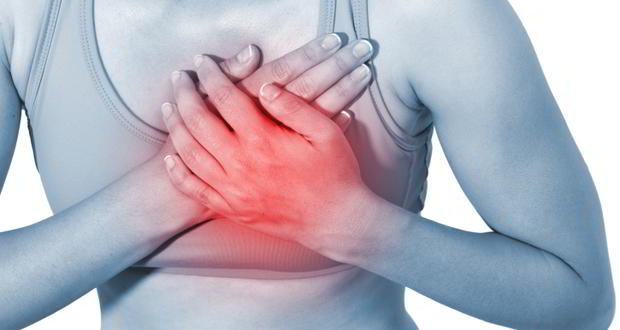
American Heart Association Discovers Women Have Hearts, Panics About Timeline
The American Heart Association has made a groundbreaking discovery that would shock absolutely no one who has ever met a woman: they have cardiovascular systems. In a revelation that apparently required decades of research and a 2024 scientific analysis, the AHA announced that women, much like their male counterparts, can experience heart disease. Revolutionary stuff.
This earth-shattering insight comes packaged with a prediction that would make any Silicon Valley forecasting model blush with envy: by 2050, six out of ten women will develop cardiovascular disease. The association delivered this news with the same breathless urgency typically reserved for announcing that water is wet, though admittedly with more statistical modeling involved.
The research, published with the kind of fanfare usually reserved for discovering new planets, reveals that women's hearts are not, in fact, decorative accessories that pump feelings and Pinterest inspiration. They are actual organs that can malfunction, clog, and stop working entirely. This represents what medical professionals are calling "a complete paradigm shift" in understanding human anatomy, assuming you've spent the last century living under a rock made entirely of medical textbooks written by men who thought women's primary health concern was hysteria.
The AHA's analysis reads like a greatest hits compilation of "Things We Should Have Figured Out Decades Ago." Women experience different heart attack symptoms than men? Groundbreaking. Hormonal changes affect cardiovascular health? Revolutionary. Pregnancy and menopause impact heart function? Someone alert the Nobel Committee. The association has essentially spent enormous resources to confirm what any woman over fifty could have told them over coffee: their bodies work differently than men's bodies, and pretending otherwise has consequences.
The timeline for this cardiovascular apocalypse is particularly interesting. By 2050, we're told, the majority of American women will be walking around with compromised hearts. This coincides neatly with the generation of women who grew up during the peak of "heart disease is a man's disease" medical wisdom, spent their reproductive years managing stress levels that would make air traffic controllers weep, and are now approaching menopause just as healthcare costs are becoming a luxury item. What could possibly go wrong?
The prediction methodology appears to involve the same kind of linear extrapolation that tech companies use to justify their billion-dollar valuations. Take current trends, draw a straight line into the future, add some alarming statistics, and voilà: a health crisis prediction that generates headlines and research funding. The model assumes that nothing will change in the next twenty-six years of medical advancement, lifestyle interventions, or social awareness. It's the epidemiological equivalent of predicting that by 2050, everyone will be using Internet Explorer because that's what the adoption curve suggested in 1997.
What makes this particularly absurd is the underlying assumption that we needed a formal study to recognize this trend. Women have been trying to tell healthcare providers about chest pain, fatigue, and cardiac symptoms for decades, only to be told they were anxious, overwhelmed, or experiencing "female troubles." The medical establishment has essentially spent years with its fingers in its ears, humming loudly, and then acted surprised when women's heart health statistics started looking grim.
The report acknowledges that traditional heart disease research has focused primarily on men, treating women as a confusing footnote in cardiovascular medicine. This is roughly equivalent to designing all cars for left-handed drivers and then expressing shock when right-handed people struggle with the controls. The medical community has approached women's heart health with the same enthusiasm it typically reserves for updating electronic health record systems: necessary, overdue, and approached with visible reluctance.
Perhaps most telling is how this "crisis" is being framed as a future problem rather than a present reality. Women are already experiencing heart disease at rates that should have triggered alarm bells years ago, but apparently it only becomes newsworthy when someone packages it with a scary projection and a 2050 deadline. It's like announcing that tech companies might have a diversity problem by 2030, while completely ignoring the current state of Silicon Valley hiring practices.
The real crisis isn't that women will develop heart disease by 2050. The real crisis is that it took until 2024 for the medical establishment to publicly acknowledge that women's cardiovascular health deserves the same attention as men's, and even now, they're treating it like a future prediction rather than a current emergency. By the time 2050 rolls around, we'll probably get another study announcing that women also have functioning brains, assuming anyone's left to be surprised by that revelation.