DooDooLamb News
40,000-year-old signs show humans were recording information long before writing
Brief published February 26, 2026 · Original source published February 25, 2026
Original reporting at sciencedaily.com.
Automated brief. Verify important details at the original source.
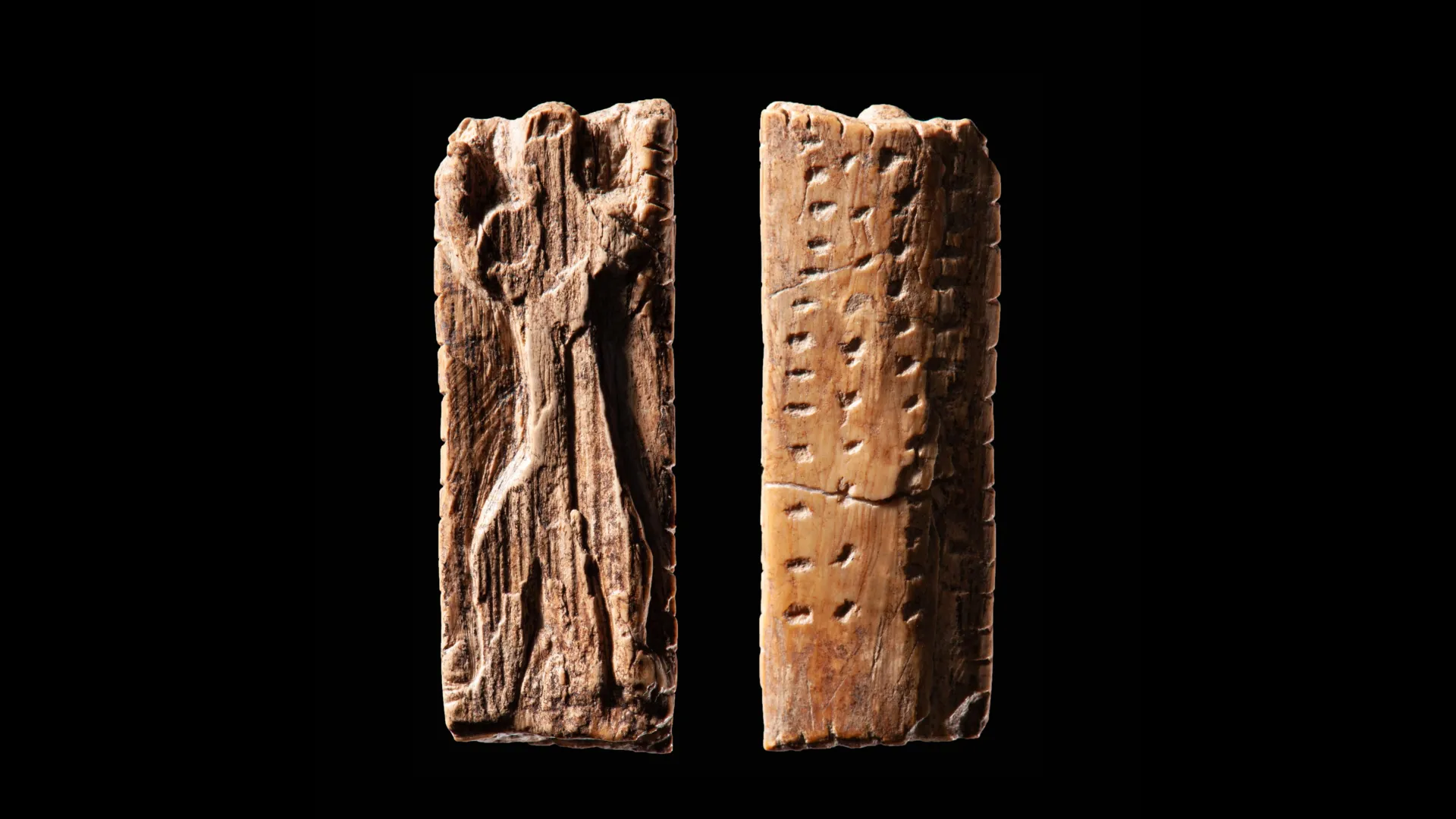
Ice Age Humans Were Already Building Their First Database 40,000 Years Ago
Turns out our ancestors were data nerds long before anyone invented spreadsheets. New research shows that Ice Age humans weren't just randomly doodling on their mammoth-bone tools—they were actually creating the world's first information storage system.
Christian Bentz, a linguist at Saarland University, and archaeologist Ewa Dutkiewicz decided to take a computational approach to over 3,000 Paleolithic artifacts covered in dots, lines, and crosses. Instead of just admiring the cave-person craftsmanship, they fed all these 40,000-year-old symbols into algorithms to see if there were any patterns. What they found was pretty remarkable: these weren't random decorations or prehistoric fidget-spinning. The symbols followed specific rules and structures that suggest our ancestors were deliberately recording information.
The researchers discovered that these early symbol systems had all the hallmarks of what linguists call "proto-writing"—organized ways of encoding and storing information that came thousands of years before anyone figured out how to write actual words. Think of it as humanity's first attempt at building a database, except instead of MySQL, they were using mammoth ivory and stone tools. The symbols appear to follow consistent patterns across different locations and time periods, suggesting that early humans had developed shared conventions for what different marks meant.
What makes this particularly fascinating is the sophistication involved. These weren't just tally marks or simple counting systems. The complexity and variety of the symbol combinations suggest that Ice Age humans were encoding more nuanced information—possibly tracking seasonal changes, recording hunting patterns, or marking significant events. It's like discovering that your great-great-great (add about 1,600 more "greats") grandmother was already keeping detailed spreadsheets about her daily life, just carved into bone instead of saved to the cloud.
The computational analysis revealed that these symbol systems shared statistical properties with later writing systems, suggesting that the cognitive leap from "let's make marks that mean things" to "let's make marks that represent spoken language" wasn't as dramatic as previously thought. Our ancestors were apparently warming up for writing for tens of thousands of years, like the world's longest pre-game show.
This research completely reframes how we think about human cognitive development and information processing. We've always known that the jump from oral tradition to written language was huge, but it turns out there was this entire intermediate phase where humans were already figuring out how to externalize their thoughts and store them for later retrieval. It's the missing link between pointing at things and posting about them on social media.
The implications go beyond just archaeological cool factor. Understanding how humans first developed systematic ways to record and share information gives us insight into the fundamental cognitive processes that eventually led to everything from libraries to the internet. Plus, it's oddly comforting to know that the urge to document everything has been hardwired into humanity for at least 40,000 years. We've literally never not been the species that writes stuff down.