DooDooLamb News
The AI power struggle and mass job displacements will affect the 2026 midterm elections
Brief published February 25, 2026 · Original source published February 24, 2026
Original reporting by Lance D Johnson at naturalnews.com.
Automated brief. Verify important details at the original source.
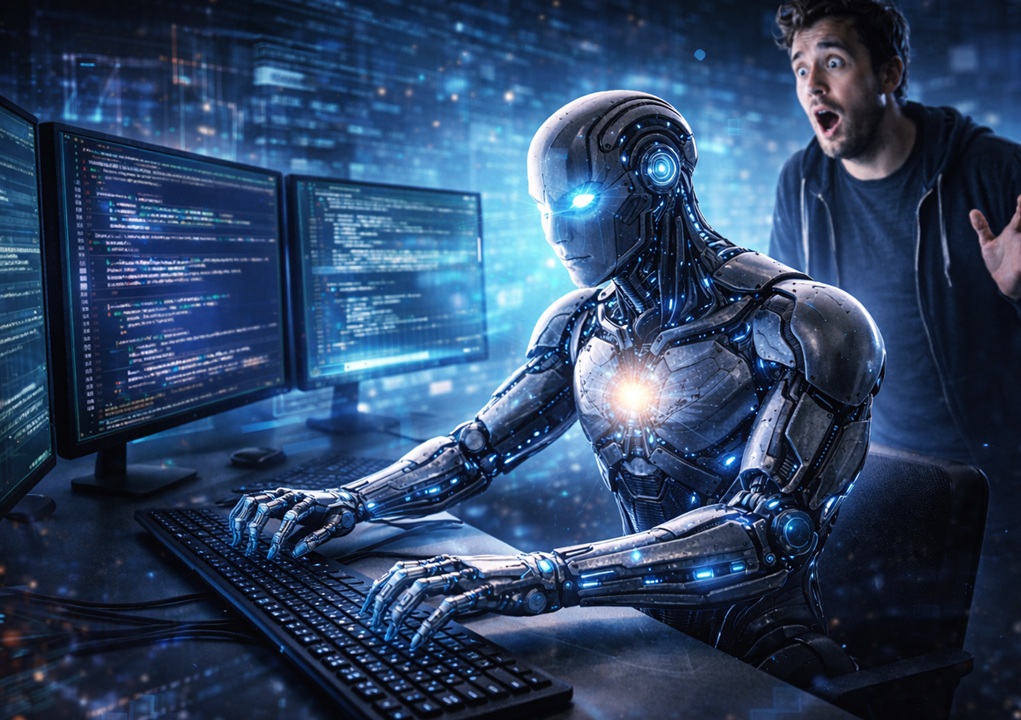
When Silicon Valley Meets Main Street: How AI Job Anxiety Could Flip the 2026 Midterms
Picture this: your friendly neighborhood barista gets replaced by a robotic arm that knows your order better than you do, and suddenly AI isn't just a tech buzzword anymore, it's a ballot box issue.
The 2026 midterm elections are still two years away, but political strategists are already gaming out scenarios where artificial intelligence becomes the defining campaign theme. The question echoing from Silicon Valley boardrooms to suburban dinner tables isn't just about innovation anymore, it's existential: are we building tools to enhance human potential, or are we accidentally constructing our own economic obsolescence?
The political calculus is getting interesting. On one side, you have the accelerationist camp arguing that AI will create more jobs than it destroys, just like previous technological revolutions. They point to how the internet birthed entire industries we couldn't have imagined in 1995. On the other side, there's growing anxiety about mass displacement happening faster than workers can retrain. Unlike previous automation waves that primarily affected manufacturing, AI is gunning for knowledge workers too, from radiologists to software developers to financial analysts.
The timing couldn't be more politically charged. Economic disruption tends to manifest in voter behavior about 18 to 24 months after people start feeling the pinch in their daily lives. If AI-driven job displacement accelerates through 2024 and 2025, as many economists predict, the political reverberations could be seismic by November 2026. We're already seeing early tremors: labor unions are demanding AI clauses in contracts, and polling shows growing skepticism about tech companies' promises that "this time will be different."
What makes this particularly fascinating from a campaign perspective is how it scrambles traditional political alignments. Blue-collar workers who've historically voted Republican might find themselves aligned with progressive calls for AI regulation and universal basic income. Meanwhile, tech-savvy professionals who lean Democratic could find themselves supporting more business-friendly policies if their own jobs feel threatened by artificial intelligence systems that can write code, analyze data, and make strategic decisions.
The policy responses emerging from both parties reflect this complexity. Some Democrats are pushing for "algorithmic accountability" measures and retraining programs, essentially treating AI like a public utility that needs oversight. Republicans are split between free-market traditionalists who want minimal interference and populist voices calling for protection of American workers against what they frame as Silicon Valley's latest attempt to squeeze out the middle class.
The challenge for candidates will be explaining AI's impact without sounding like they're either fear-mongering or hand-waving legitimate concerns. Try explaining "large language models" (the technology behind ChatGPT that processes and generates human-like text) or "machine learning inference" (when AI systems make predictions based on patterns they've learned) to voters who just want to know if their job will exist in five years.
This isn't just about displaced truck drivers or factory workers anymore. When AI can write marketing copy, diagnose medical conditions, and analyze legal documents, suddenly everyone from copywriters to paralegals to junior analysts is wondering about their career trajectory. The ripple effects could reshape everything from housing markets in tech hubs to education policy in swing states.
The 2026 midterms might well be remembered as the first election where artificial intelligence moved from campaign talking point to kitchen table issue. Whether that benefits incumbents or challengers will depend largely on whether the economic disruption feels manageable or overwhelming to middle-class voters.
One thing's certain: politicians who dismiss AI concerns as techno-anxiety might find themselves on the wrong side of history, and more immediately, on the wrong side of the ballot box. The future of work isn't just an economic question anymore, it's become a political one.