DooDooLamb News
U.S. imports from Taiwan surpass goods from China for the first time in decades
Brief published February 24, 2026 · Original source published February 23, 2026
Original reporting at naturalnews.com.
Automated brief. Verify important details at the original source.
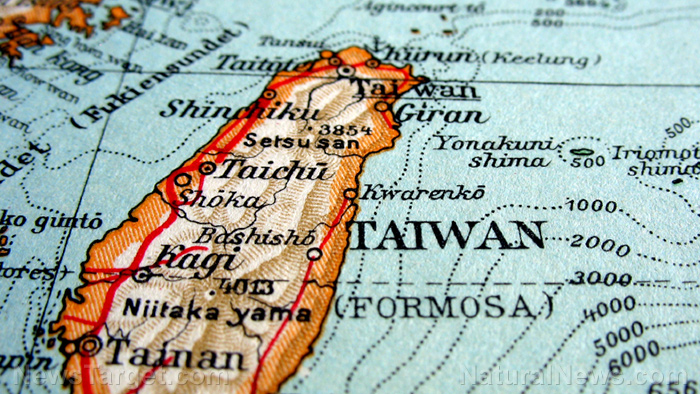
The Great Trade Switcheroo: Taiwan Just Dethroned China as America's Favorite Shopping Partner
Well, well, well. After decades of China being America's go-to supplier for basically everything from rubber ducks to smartphones, we've got ourselves a genuine plot twist worthy of a trade war soap opera. Taiwan has officially overtaken China as America's top import buddy for the first time in what feels like forever, and the reasons behind this seismic shift are as fascinating as they are predictable.
The Numbers Don't Lie (Unlike Politicians)
Let's dive into the delicious data that's making economists everywhere adjust their reading glasses. According to the Department of Commerce, which keeps track of these things so we don't have to, U.S. imports from China plummeted nearly 44% year-over-year in what can only be described as a spectacular nosedive. Meanwhile, Taiwan swooped in like that friend who shows up with pizza when you're having a rough day.
This isn't just a minor statistical blip either. We're talking about a fundamental reshuffling of global trade patterns that would make even the most jaded supply chain manager do a double-take. The last time Taiwan held this coveted position, the internet was still something most people accessed through screeching dial-up modems, and "artificial intelligence" was primarily the domain of science fiction movies.
The AI Gold Rush Strikes Again
Here's where things get really spicy. The booming demand for AI technology is playing a starring role in this trade drama, and Taiwan happens to be sitting pretty at the center of the semiconductor universe. If chips were oil, Taiwan would be Saudi Arabia, except with better night markets and considerably more typhoons.
The island nation has become the undisputed champion of chip manufacturing, producing the tiny silicon brains that power everything from your smartphone to those ChatGPT conversations you have at 2 AM.
Taiwan Semiconductor Manufacturing Company (TSMC) isn't just a company; it's basically the fairy godmother of the tech world, waving its silicon wand and making AI dreams come true. When every tech giant from Apple to NVIDIA needs cutting-edge processors for their latest AI ventures, they come knocking on Taiwan's door with bags of money and very specific technical requirements.
Tariffs: The Plot Device That Changed Everything
Of course, we can't ignore the elephant in the room, or rather, the trade war that's been rumbling in the background like distant thunder. The tariffs imposed on Chinese goods haven't just been academic exercises in economic theory; they've been reshaping global commerce with the subtlety of a wrecking ball at a tea party.
American companies, faced with hefty additional costs for Chinese imports, have been scrambling to diversify their supply chains faster than you can say "trade deficit." This isn't just about saving money; it's about survival in an increasingly complex geopolitical landscape where yesterday's reliable partner might become tomorrow's economic adversary.
The result? A massive game of international musical chairs where countries are frantically repositioning themselves to capture market share. Taiwan, with its advanced manufacturing capabilities and relatively stable relationship with the United States, found itself in the right place at the right time with the right expertise.
Beyond Chips: The Broader Picture
While semiconductors are stealing the headlines (and rightfully so, given their importance to basically every aspect of modern life), Taiwan's export success story extends beyond just computer chips. The island has been quietly building a reputation as a reliable supplier across multiple high-tech sectors, from precision machinery to advanced materials.
This diversification strategy has paid off handsomely as American companies seek alternatives to Chinese suppliers. It's like having a really well-rounded friend who can help you move apartments, fix your computer, and make excellent dumplings all in one weekend.
The Geopolitical Chess Game
This trade shift isn't happening in a vacuum, though. It's part of a larger strategic realignment that's been brewing for years. The United States has been actively encouraging companies to reduce their dependence on Chinese supply chains, not just for economic reasons but for national security concerns as well.
When critical technologies like semiconductors are involved, supply chain resilience becomes a matter of national importance. Having all your eggs in one geopolitical basket, especially when that basket belongs to a strategic competitor, starts to look less like smart economics and more like a potential vulnerability.
Taiwan's rise as a trade partner represents more than just shifting market dynamics; it reflects America's broader strategy of "friend-shoring" or "ally-shoring," where trade relationships are increasingly viewed through the lens of geopolitical alignment and shared values.
What This Means for Your Wallet (And Your Gadgets)
For the average consumer, this trade reshuffling might seem like abstract economic theater, but it has real implications. The prices of the tech gadgets we love could be influenced by these supply chain shifts, though the impact isn't necessarily straightforward.
On one hand, Taiwan's advanced manufacturing capabilities mean high-quality products, but premium manufacturing often comes with premium pricing. On the other hand, increased competition and supply chain diversification can drive innovation and efficiency gains that benefit consumers in the long run.
The Future of Global Trade
This milestone represents more than just a quarterly trade statistic; it signals a fundamental shift in how global commerce operates in an era of increasing geopolitical tensions and technological competition. The days of purely cost-driven supply chain decisions are giving way to more complex calculations that factor in political stability, technological capability, and strategic alignment.
As we look ahead, this trend is likely to accelerate rather than reverse. The combination of AI demand, geopolitical considerations, and the ongoing digital transformation of the global economy suggests that Taiwan's position as a crucial trade partner is not just a temporary anomaly but potentially a new normal.
The great trade switcheroo of 2024 might just be the beginning of a broader reconfiguration of global economic relationships, one silicon chip at a time.