DooDooLamb News
Sandboxing LLM-Generated Code Needs a Different Threat Model
Brief published October 30, 2026 · Original source published October 29, 2026
Original reporting by Manikandan Kurup at digitalocean.com.
Automated brief. Verify important details at the original source.
What happened
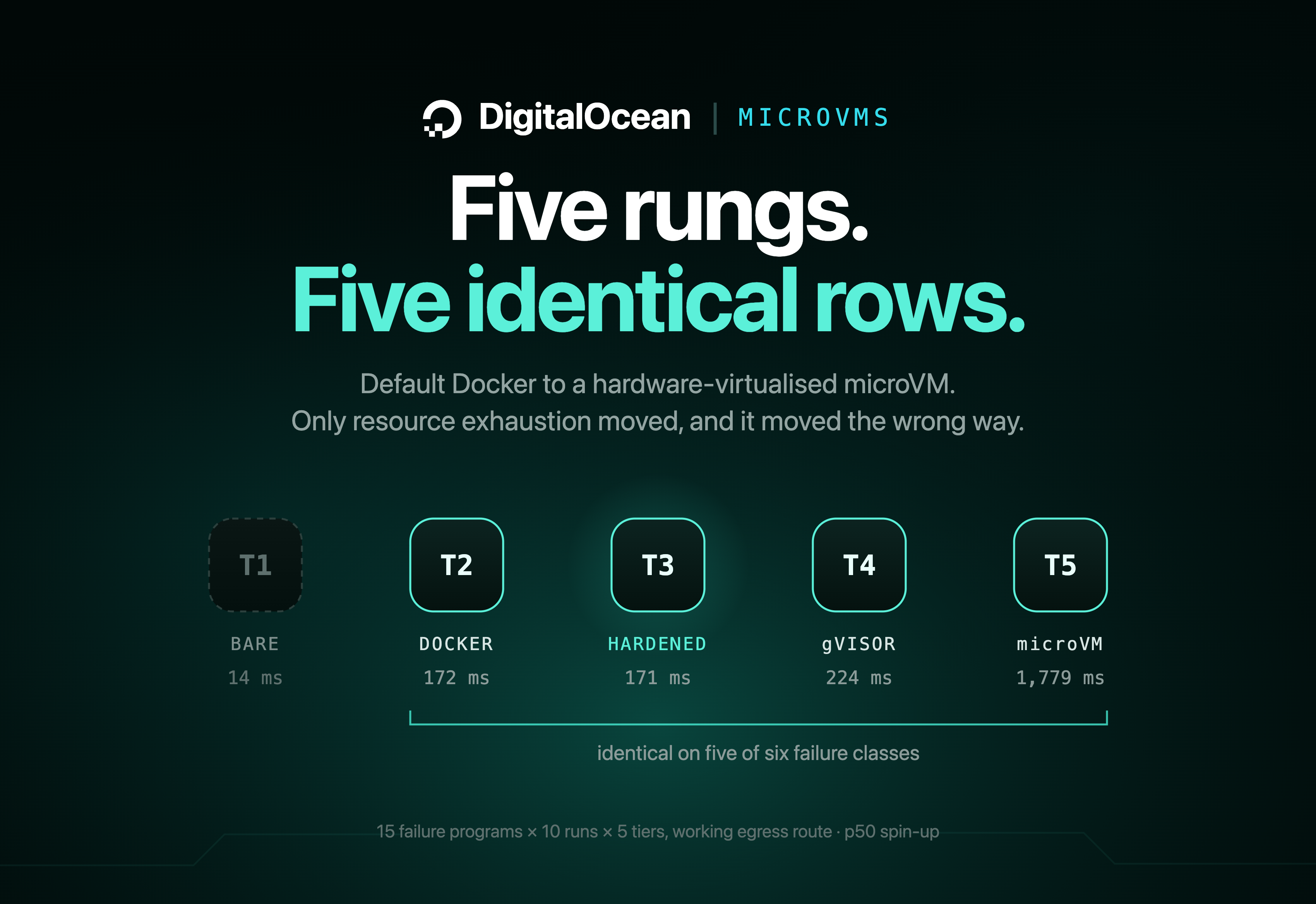
LLM-generated code introduces a distinct security challenge: failures tend to be accidental rather than adversarial, which means threat models built around malicious actors may not apply cleanly. The article describes testing five sandbox tiers, ranging from bare process execution to Docker to Firecracker microVMs, to measure what each level of containment actually costs in terms of idle overhead and execution constraints. The framing centers on a concrete decision point: an agent produces Python code and needs somewhere to run it safely.
Why it matters
Builders deploying code-executing agents typically inherit threat models designed for intentional attacks. If the dominant failure mode is unintentional behavior, over-engineered sandboxes may impose unnecessary latency and resource costs while under-addressing the actual risk surface. Choosing the wrong tier has measurable consequences for both safety and performance.
What to watch
Whether the containment cost data from the five-tier comparison gets published in enough detail for teams to use it in architecture decisions, and whether a community-accepted threat model for agentic code execution emerges.