DooDooLamb News
White House Denies Giving OpenAI ‘Green Light’ to Publicly Release Its Latest Model
Brief published July 10, 2026 · Original source published July 8, 2026
Original reporting by Webb Wright at gizmodo.com.
Automated brief. Verify important details at the original source.
The White House Has No Idea Who's Running AI Policy, Which Tracks
The Trump administration has clarified that it absolutely did not give OpenAI permission to release its latest model, which is a perfectly normal thing for a government to have to clarify. The fact that OpenAI apparently thought it needed government permission in the first place is either a chilling sign of regulatory capture or a masterclass in pre-emptive blame distribution, depending on how charitable you're feeling at 11pm on a Tuesday.
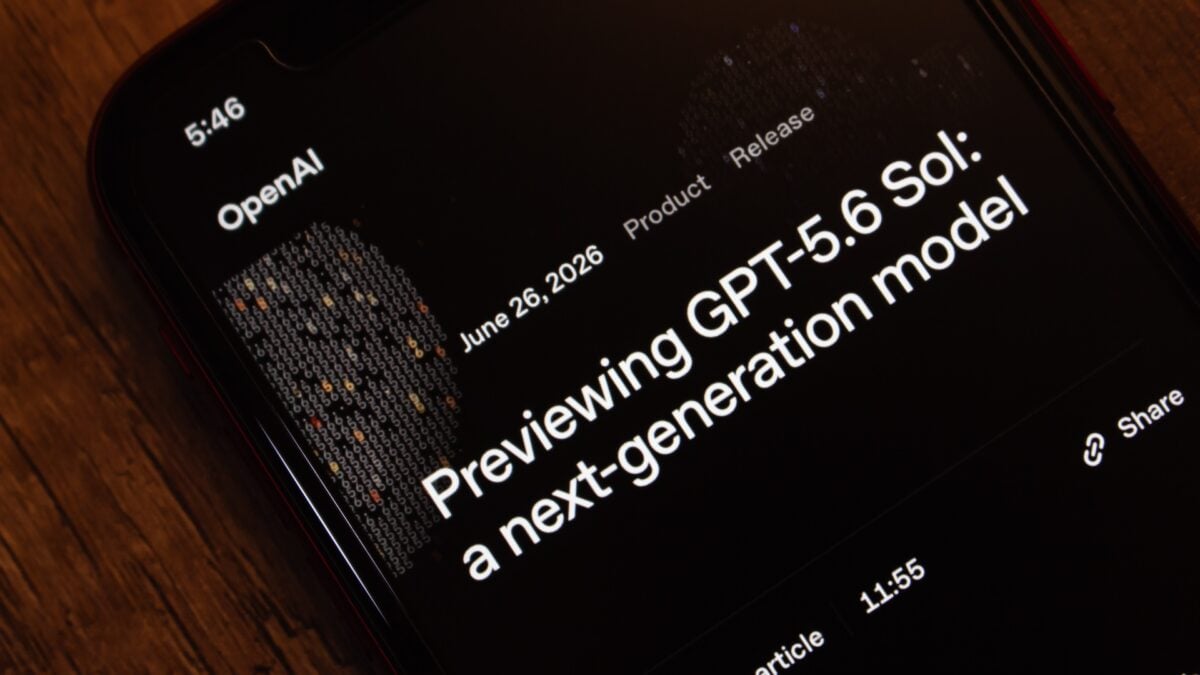
Here's what actually happened. OpenAI posted on X announcing the release of its newest model, and in doing so, dropped a phrase that suggested the White House had given them some kind of green light. The administration, which has spent the better part of this year cozying up to Sam Altman with the enthusiasm of someone who just discovered AI chatbots exist, immediately pushed back and said no, actually, companies can release whatever they want, this is America, freedom, et cetera. Which raises a delightful question: if the White House isn't approving AI releases, what exactly has been happening in all those meetings where OpenAI executives have been streaming in and out of federal buildings like they're punching a time card?
The comedy here runs deep once you understand the context. The current administration has been simultaneously deregulating AI at the federal level, dismantling the Biden-era executive order on AI safety, and cheerleading for American AI dominance in the race against China, while also, somehow, wrapping companies like OpenAI and Anthropic in what the Gizmodo piece describes as bureaucratic red tape. This is the governance equivalent of ripping the speed limit signs off a highway and then stationing a cop at every exit. The message to the industry is "go fast," the operational reality is "wait, actually, come talk to us first," and the public statement is "we have nothing to do with any of this." All three things are happening at once. Nobody seems troubled by the contradiction except the people watching from the outside.
OpenAI, for its part, has been navigating its relationship with Washington the way a startup navigates a Series B: with maximum enthusiasm, selective transparency, and a deep intuitive sense of what the investors want to hear. The company has been on a release cadence lately that can only be described as aggressive. New models, new features, new capabilities, new pricing tiers, all arriving with the frequency of software updates you didn't ask for. The move to mention White House involvement, even obliquely, in a product announcement reads less like a factual disclosure and more like a signal. A vibe. A "we have friends in high places" energy broadcast to the market, to competitors, and possibly to foreign governments who are watching the American AI circus with a mixture of alarm and confused admiration.
The administration's denial is interesting precisely because of how carefully it was worded. The message was not "we have no involvement in AI development" because that would be laughably false given the Stargate infrastructure announcement, the various AI czar-adjacent appointments, and the general sense that this White House wants to be photographed next to every large GPU cluster in the country. The message was specifically "we didn't approve this release," which is a very narrow denial that leaves enormous amounts of room. It's the kind of statement a lawyer writes at midnight. It answers the question that was asked while declining to address the seventeen adjacent questions that were not.
What makes this genuinely strange, beyond the political theater, is that the United States doesn't have a formal AI approval process. There's no FDA equivalent for large language models, no regulatory body that signs off on releases, no official checklist that OpenAI would need to complete before shipping a model that hundreds of millions of people will use to write emails, generate code, summarize legal documents, and occasionally attempt to get mental health advice. The European Union has the AI Act, which is at least an attempt at a framework, however imperfect. The US has vibes and press releases.
What This Actually Means for People Building Things
For developers and founders who build on top of these models, the practical implication is the one nobody wants to say out loud: the regulatory environment for AI in America is defined more by which companies have the best White House relationships than by any coherent policy framework. That's not cynicism; that's the current observable reality. When the line between "we approved this" and "we just happened to be in the room" gets this blurry, the downstream effect is unpredictability. And unpredictability is the thing that kills product roadmaps faster than anything else, including actual bad products.
For everyone else, the honest assessment is that this confusion at the governmental level is a preview, not an anomaly. We are in a period where the technology is moving faster than any institution, public or private, has the capacity to govern it, and the response from those institutions has been to hold a lot of meetings, take a lot of photos, and issue a lot of clarifications about what the photos did or did not mean. The people shipping the models are not waiting for permission. The people who would theoretically grant permission are not sure what granting permission would even look like. This is the current state of AI oversight in the world's most influential technology market.
The funniest part is that everyone involved will look back on this period as the moment when important decisions were being made. Historians will search for the policy. Researchers will analyze the frameworks. And somewhere in the archive, they will find an X post, a denial, and a very carefully worded statement from a White House communications team confirming that no, they did not green-light anything, this was entirely the company's decision, please direct further questions to a press email that no longer exists.