DooDooLamb News
Aqara Camera Hub G350 Review: An Excellent Indoor Matter Camera
Brief published July 7, 2026 · Original source published July 5, 2026
Original reporting by Wes Davis at gizmodo.com.
Automated brief. Verify important details at the original source.
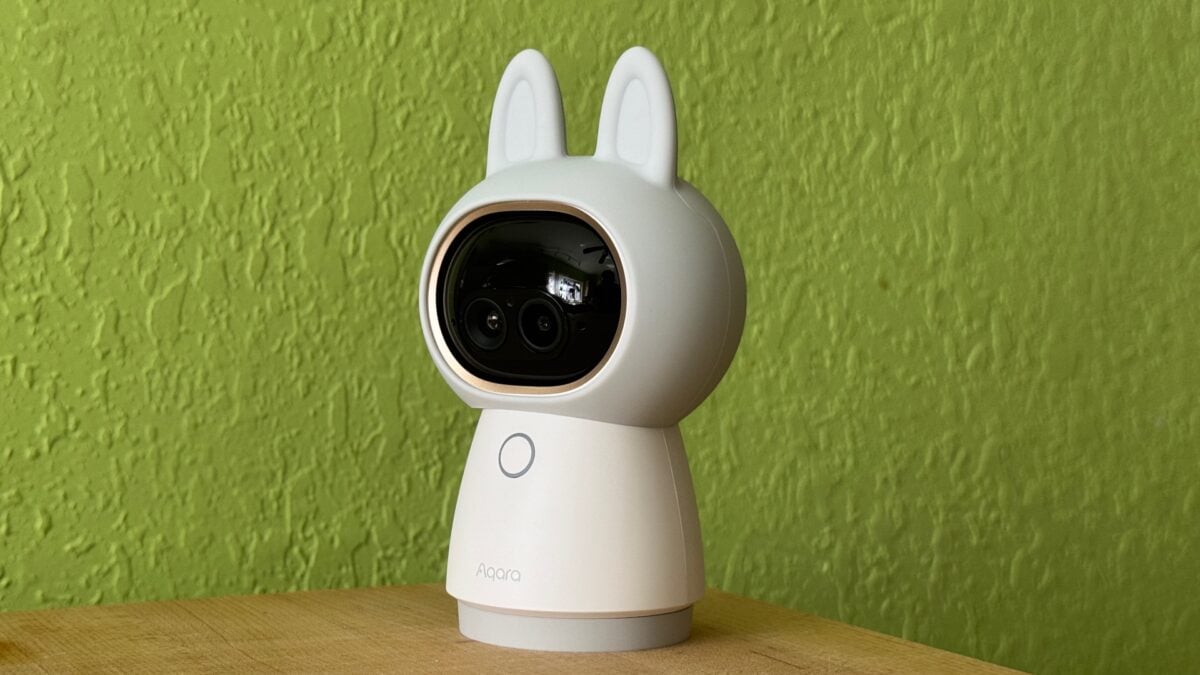
Aqara Built a Smart Home Security Camera That Looks Like It's Judging Your Life Choices
A $160 surveillance device shaped like a cartoon rabbit is now watching your living room, and somehow this is considered a design improvement. The Aqara Camera Hub G350 has arrived, and it wants you to know that being monitored in your own home can be adorable.
Aqara, the smart home brand that has quietly built one of the more competent ecosystems in a space crowded with garbage, has released the G350: a pan-and-tilt indoor security camera that reviewers are calling excellent, and that looks, per the official description, "Miyazaki-like." For the uninitiated, that means it evokes the visual language of Studio Ghibli films, specifically the part where an innocent woodland creature turns to look directly at you with enormous eyes and you suddenly feel very seen. The camera has a squat body and two antenna-style ears on top. It is, objectively, a surveillance device designed to look like a friend. This is either charming or deeply unsettling depending on how much you've read about the history of consumer data collection, and probably both regardless.
The G350 runs $160 and ships with the full suite of features you'd expect from a modern indoor camera worth taking seriously. Pan-and-tilt means the camera can physically rotate to follow motion, covering a room rather than staring at one fixed patch of wall like a very expensive nightlight. It shoots in what Aqara claims is 2.8K resolution, which is not a typo but is absolutely a marketing decision; 2.8K sits between the familiar 1080p and 4K benchmarks, close enough to 4K to sound impressive on a spec sheet while requiring meaningfully less storage and processing than actual 4K. It is the "craft beer" of camera resolutions: technically distinct, slightly premium, and you'll probably stop noticing after the first week.
The camera's headline party trick is its Matter support, which is where things get genuinely interesting for the roughly fourteen people who have been following the smart home standards wars with the intensity of a medieval scholar tracking papal succession. Matter is the cross-platform smart home protocol backed by Apple, Google, Amazon, and the Connectivity Standards Alliance, representing the industry's latest attempt to make devices from different companies actually talk to each other. Previous attempts at this include Z-Wave, Zigbee, Thread, and a general atmosphere of chaos and despair. Matter's camera support (officially called "Matter for Cameras") is newer and less universally implemented than its support for lights and locks, which means the G350 is one of the earlier devices to actually ship with it working. The practical upshot: if you're in the Apple Home, Google Home, or Amazon ecosystem, this camera is supposed to play nice without requiring a PhD in networking or a dedicated hub. (The G350 also is a hub, capable of connecting other Aqara Zigbee and Thread devices, which is either elegant consolidation or an invitation to blame one device when your entire smart home stops responding at 2am on a Tuesday.)
The bunny ears, it should be noted, contain the antennas. This is functional. This is also the kind of design decision that sounds completely normal in a product brief and becomes increasingly strange the longer you think about it. A camera in your bedroom has rabbit ears because those ears are actually radio transmitters, and the whole assembly watches you sleep with the serene expression of a creature that has never known mortality. Reviewers have noted the ears can be "creepy." This assessment feels simultaneously obvious and undersold. To Aqara's credit, the creepiness appears to be the intended vibe: leaning into slightly-off cute rather than pretending the camera is invisible. It's the difference between a bouncer who makes eye contact and one who pretends you don't exist. Both are watching you. Only one is honest about it.
On pure technical performance, the G350 earns its praise. The 2.8K image is sharp, the pan-and-tilt tracking is reportedly smooth, local storage via microSD works without forcing a cloud subscription, and the Aqara app has matured into something that doesn't make you want to throw your phone. The AI-based person and pet detection (on-device, not requiring a subscription to unlock basic functionality, which in 2025 remains a genuine differentiator and a quiet indictment of competitors who charge monthly fees to tell you that yes, that was a person who walked past your camera) works reliably. The hub functionality means one device is doing the work of several, which in the smart home space is the equivalent of finding a contractor who shows up when they say they will.
The honest read is that the G350 is a legitimately good product in a category full of products that are fine-until-they-aren't. The Matter support matters (regrettable but accurate) primarily for people already invested in a major smart home ecosystem who are tired of maintaining a separate app for every blinking device in their house. For everyone else, it's a capable camera that happens to have competitive local storage options and doesn't immediately demand your credit card for a recurring subscription just to view footage older than 24 hours. That's a bar that should be higher than it is, and the G350 clears it.
What this doesn't mean is that your smart home is suddenly unified, frictionless, or finished. Matter is still maturing, camera support specifically is still early, and the history of smart home "this time it'll all work together" announcements suggests maintaining calibrated skepticism. The G350 is a good camera. It is not a solution to the underlying fact that your house now contains seventeen devices from eleven companies running on four protocols and the whole thing reboots itself every time there's a firmware update.
Somewhere in your living room, a small robot rabbit with antenna ears is tracking your movement, storing footage locally, and connecting your smart home devices via protocols named after geological phenomena and abstract concepts. It is doing this well. It is also watching you. The least we can do is acknowledge that it looks exactly like what it is: a surveillance device that was designed by someone who thought, correctly, that you'd feel better about being monitored if the monitor had a cute face. They were right, and that's the funniest thing about all of it.