DooDooLamb News
OpenAI’s CFO Reportedly Wants to Delay the IPO from 2026 to 2027
Brief published May 4, 2026 · Original source published May 2, 2026
Original reporting by Mike Pearl at gizmodo.com.
Automated brief. Verify important details at the original source.
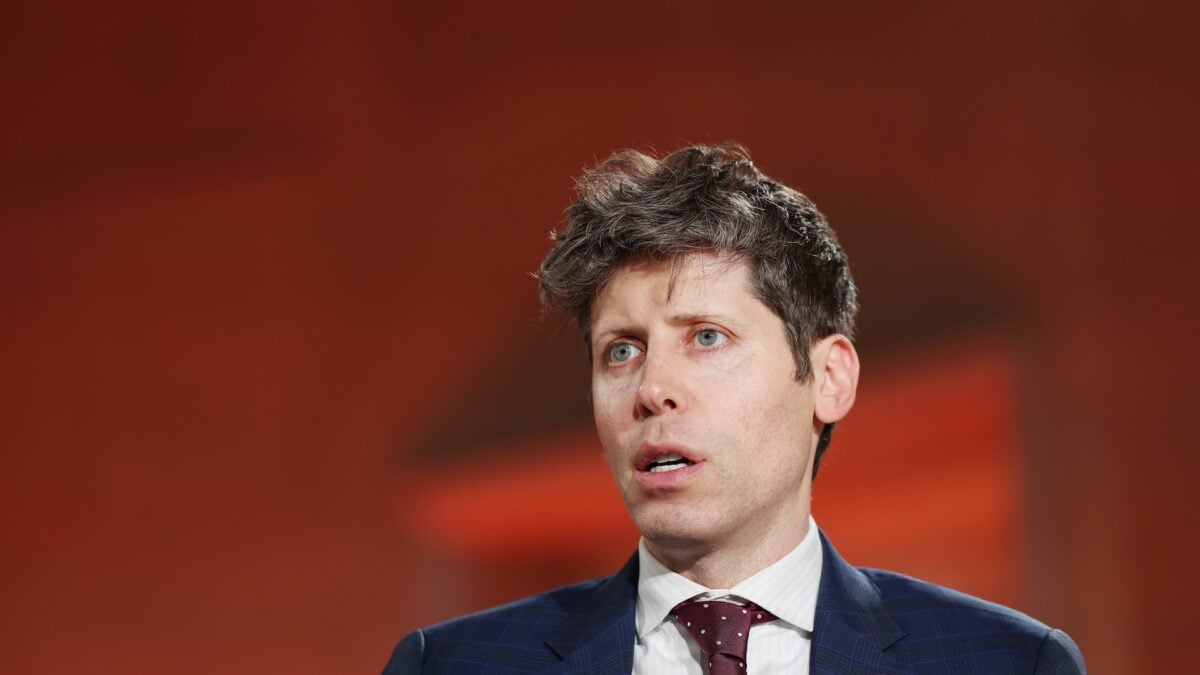
OpenAI's CFO Reportedly Discovers Math, Suggests Maybe Burning Money Isn't a Business Model
In a shocking development that has rocked Silicon Valley to its core, OpenAI's chief financial officer has reportedly suggested that companies should make money before selling shares to the public. The radical proposal, which insiders describe as "accounting fundamentalism," has sent tremors through an industry built on the sacred principle that revenue is just a number you worry about after the IPO.
According to anonymous sources speaking to the Wall Street Journal, OpenAI's CFO wants to push the company's public offering from 2026 to 2027, citing the apparently controversial notion that investors might want to see sustainable profits before handing over their retirement funds. The suggestion has reportedly caused confusion among OpenAI executives, many of whom believed that "profitable" was just another word for "lacking vision."
The timing of this financial heresy couldn't be more awkward. OpenAI has spent the better part of two years convincing the world that artificial general intelligence is just around the corner, right after they figure out how to stop their chatbots from hallucinating legal cases and insisting that 2+2 equals purple. The company's business model, which industry analysts describe as "spend astronomical amounts of money training models that cost even more astronomical amounts to run," has been hailed as visionary by investors who apparently skipped Economics 101.
OpenAI's revenue picture tells a story that would make a Victorian orphanage weep. Despite ChatGPT becoming the fastest-growing consumer application in history (a record previously held by whatever app convinced people to rank their friends by attractiveness), the company is reportedly hemorrhaging cash faster than a crypto exchange during a market crash. The issue isn't demand—people love talking to computers that confidently give wrong answers with the authority of a tenured professor. The problem is that each conversation costs OpenAI somewhere between a few cents and several dollars, depending on how many times users ask the AI to write their breakup texts or explain quantum mechanics using only Taylor Swift lyrics.
The financial challenges stem from what engineers politely call "compute costs" and what accountants call "a mathematical nightmare." Running large language models requires the kind of computing power typically reserved for simulating nuclear explosions or rendering the latest Marvel movie. Every time someone asks ChatGPT to write a sonnet about their cat, somewhere in a data center, thousands of GPUs collectively sigh and burn through enough electricity to power a small town. It's like operating a casino where every customer gets to play for free, but the house still has to pay for the building, the dealers, and the complimentary drinks.
The situation has reportedly led to heated discussions in OpenAI's C-suite about what constitutes reasonable spending. While CEO Sam Altman continues to evangelize about the transformative potential of AI (and the slight possibility that it might accidentally destroy humanity), the CFO has apparently been running numbers that look less like hockey sticks and more like seismic readings during an earthquake. The tension represents a classic Silicon Valley philosophical divide: the eternal struggle between those who believe in growing fast and breaking things, and those who believe in occasionally checking the bank account.
Industry observers note that OpenAI's predicament reflects a broader challenge facing the AI sector. Training state-of-the-art models requires investments that would make NASA's budget look modest, while the path to profitability remains about as clear as OpenAI's explanations of how ChatGPT actually works. Companies across the AI ecosystem are discovering that "revolutionary technology" and "sustainable business model" don't always play nicely together, especially when your product's primary input costs scale with demand in ways that would make traditional economists reach for their anxiety medication.
The reported IPO delay also highlights the awkward reality that OpenAI has been valued like a mature tech giant while operating more like an extremely well-funded research project. The company's last funding round reportedly valued it at over $150 billion, a number that assumes ChatGPT will eventually generate revenue somewhere between Google and the GDP of a medium-sized country. Achieving those expectations requires either a miraculous breakthrough in efficiency or convincing every human on Earth to pay a monthly subscription for AI companionship.
For developers and entrepreneurs watching from the sidelines, OpenAI's financial soul-searching offers a sobering reminder that even the most hyped technologies eventually encounter the unforgiving mathematics of business. The CFO's reported desire to pump the brakes suggests that somewhere beneath all the AGI rhetoric and transformer architectures, someone is still doing the unglamorous work of making sure the lights stay on.
Perhaps most tellingly, the delay signals that even in an industry famous for "fake it till you make it," there's apparently still a line somewhere. Turns out that line is drawn by CFOs with calculators and a stubborn attachment to concepts like "cash flow" and "unit economics." Who knew that running a business might actually require making money? Revolutionary stuff, truly.