DooDooLamb News
Maine Governor Vetoes Landmark Data Center Moratorium
Brief published April 28, 2026 · Original source published April 26, 2026
Original reporting by Ece Yildirim at gizmodo.com.
Automated brief. Verify important details at the original source.
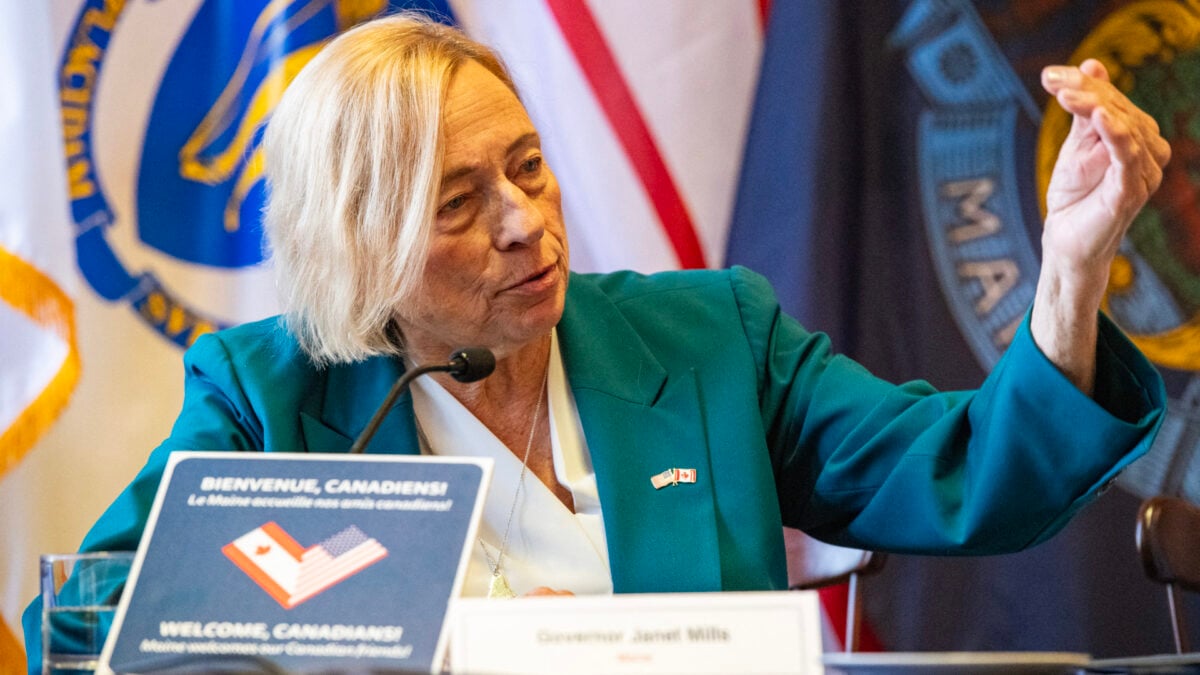
Maine Governor Discovers That Blocking AI Data Centers Is Bad for Campaign Donations
Maine almost became the first state brave enough to tell Big Tech's server farms to cool their jets, but Governor Janet Mills apparently remembered she has bills to pay.
The Pine Tree State's legislature had passed what could charitably be called a "timeout" on AI data centers, freezing new construction until November 2027 while the state figured out whether turning half of rural Maine into a humming warehouse district was actually a good idea. Mills vetoed it faster than you can say "economic development opportunity," ensuring that Maine will continue its proud tradition of letting corporations strip-mine its natural resources, just with more GPUs this time.
The moratorium would have been remarkably simple in its ambition: stop building these power-hungry monuments to artificial intelligence until someone can figure out what they're actually doing to Maine's electrical grid and environment. The bill specifically targeted data centers that train large language models, which is tech speak for "the kind of facilities that consume enough electricity to power small cities so that ChatGPT can write your resignation letter." These aren't your grandfather's server rooms hosting email and websites. Modern AI training facilities are essentially industrial-scale math operations that require cooling systems powerful enough to prevent silicon from achieving nuclear fusion.
Mills justified her veto with the kind of economic reasoning that sounds reasonable until you think about it for more than thirty seconds. She argued that blocking data centers would hurt Maine's economy and make the state less competitive in attracting business. This is the same logic that has given us decades of "job creators" who create jobs in the sense that strip mining creates scenic overlooks. The governor worried that a moratorium would send the wrong message to potential investors, apparently forgetting that the right message might be "we actually think before we let you build industrial facilities in our backyard."
The veto comes at a particularly ironic moment in the AI infrastructure boom. Companies are racing to build data centers anywhere they can find cheap land and cheaper electricity, often in states that can least afford the strain on their power grids. Maine's electricity comes from a mix of hydroelectric, wind, and imported power, creating the kind of green energy profile that makes AI companies salivate with ESG compliance possibilities. Nothing says "sustainable AI" quite like building your server farm next to a pristine forest and calling it carbon neutral because you bought some offsets.
The opposition to Mills' veto wasn't just tree-hugging environmentalists clutching their hemp tote bags. The moratorium had support from a coalition that included energy experts, environmental groups, and residents who had lived through enough boom-and-bust development cycles to recognize the pattern. They pointed out that data centers are essentially the industrial equivalent of cryptocurrency mining: they consume enormous amounts of resources, employ relatively few people once operational, and leave communities holding the bag when the economics inevitably shift. The facilities require massive initial infrastructure investments in power transmission and cooling systems, much of which ends up being subsidized by local ratepayers whether they wanted an AI training facility in their neighborhood or not.
What makes this particularly fascinating is the timing. The AI industry is currently in the middle of what economists politely call "finding sustainable business models" and what everyone else calls "burning through venture capital while hoping something profitable emerges." Data centers are being built on the assumption that demand for AI training and inference will continue growing exponentially forever, which is the kind of assumption that has historically preceded some very expensive real estate becoming very cheap real estate.
The reality check here is pretty straightforward: Maine just chose short-term economic development promises over long-term planning, which is about as surprising as a software deployment failing on a Friday afternoon. The state will likely get its data centers, along with the temporary construction jobs, permanent infrastructure costs, and ongoing questions about whether hosting other people's artificial intelligence experiments is really the economic foundation you want to build your future on. Other states watching this play out now know that even Democrat-controlled legislatures with environmental constituencies can be convinced to roll out the red carpet for Big Tech's latest infrastructure land grab.
Mills has essentially decided that Maine's economic future lies in becoming a digital strip mine, which is probably the most honest economic development strategy the state has pursued in decades. At least when you're hosting someone else's robots, you don't have to pretend they're going to solve climate change.