DooDooLamb News
How China fell for a lobster: What an AI assistant tells us about Beijing's ambition
Brief published April 7, 2026 · Original source published April 5, 2026
Original reporting at bbc.com.
Automated brief. Verify important details at the original source.
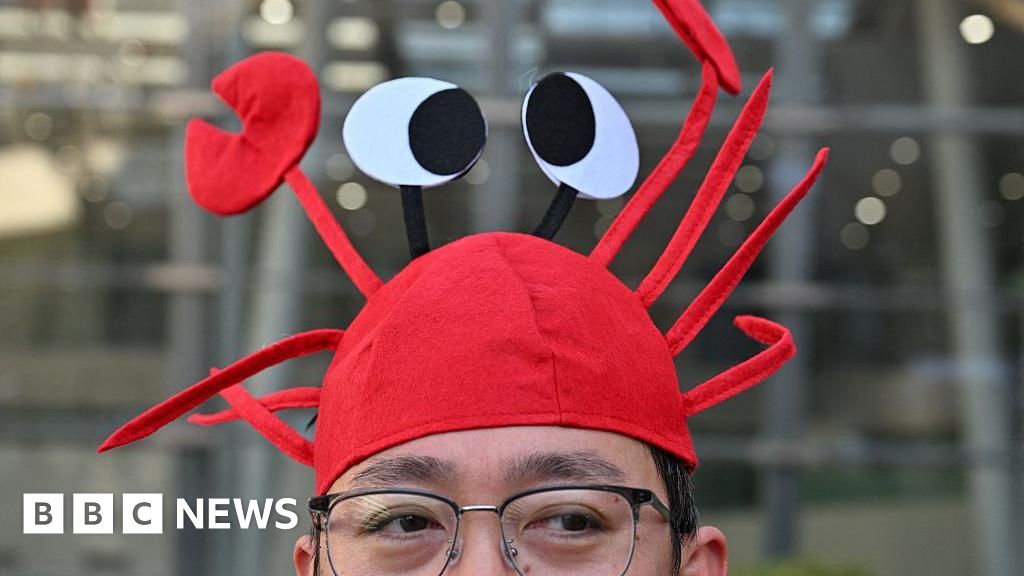
China's New AI Girlfriend Can Do Your Homework, Also Has Eight Legs
In a development that perfectly encapsulates humanity's relationship with artificial intelligence, China has collectively lost its mind over an AI assistant that everyone insists on calling "lobster." Because apparently, when you're building the future of human-computer interaction, the first step is naming it after something you dip in butter.
DeepSeek's R1 model launched in January and immediately triggered what can only be described as a national crustacean obsession. Chinese users began "raising lobsters" – a euphemism for training AI assistants that sounds like either a very niche hobby or a very weird dating app. Within weeks, social media platforms were flooded with people bragging about their lobster's performance metrics the way American teenagers once compared their Tamagotchis.
The phenomenon reached peak absurdity when users started treating their AI assistants like digital pets that happened to be capable of advanced reasoning. One particularly enthusiastic lobster farmer claimed his creation could complete 200 tasks in two minutes, which raises the uncomfortable question of what exactly those tasks were and whether we should be impressed or deeply concerned. The whole scene played out like a bizarro version of Pokemon Go, except instead of catching fictional creatures, people were training artificial intelligences to be better at being human than actual humans.
This mass adoption of AI assistants reveals something fascinating about how different cultures approach new technology. While Silicon Valley wraps every AI announcement in breathless proclamations about "transforming workflows" and "unlocking human potential," Chinese users just started calling it a lobster and got to work. No lengthy Medium posts about the philosophical implications of artificial general intelligence. No venture capitalists explaining how this will disrupt the disruption. Just millions of people quietly training their digital crustaceans to write essays, solve problems, and apparently do whatever 200 mysterious tasks constitute a good two-minute performance.
The "lobster" phenomenon also highlights China's unique position in the global AI race. While American companies burn billions trying to build the perfect large language model, Chinese developers are focusing on something arguably more important: making AI actually useful for regular people. DeepSeek's approach strips away the mystique and marketing speak that surrounds Western AI development. There's no grand vision of replacing human creativity or solving climate change. It's just a really good AI assistant that people can train to do specific tasks, and somehow that honesty made it go viral.
The technical details matter here, even if they're buried under layers of crustacean metaphors. DeepSeek R1 represents a significant advancement in what AI researchers call "reasoning models" – systems that can work through complex problems step by step rather than just pattern-matching their way to an answer. Think of it as the difference between a student who shows their work and one who just writes down the final answer. The former might take longer, but you can actually trust the result.
What makes this particularly noteworthy is that DeepSeek achieved this breakthrough while flying under the radar of Western tech media, which has been so busy covering the latest OpenAI drama or Google's next experimental product that they missed an entire country collectively adopting advanced AI assistants. It's like discovering that while you were arguing about which streaming service has the best content, your neighbor built their own Netflix and invited the whole block over for movie night.
The lobster craze also exposes the cultural divide in how we think about AI development. Western discourse tends to oscillate between utopian promises and existential dread, as if artificial intelligence will either save humanity or destroy it, with no middle ground. Chinese users, meanwhile, just wanted to know if their lobster could help with homework. This pragmatic approach might actually be more revolutionary than any grand AI manifesto, because it treats artificial intelligence as a tool rather than a digital deity.
But here's where the story gets genuinely interesting: the success of "lobster raising" suggests that the future of AI might not be about building one perfect assistant for everyone, but rather about giving people the tools to customize AI for their specific needs. It's the difference between buying a car off the lot and building your own engine. Most people might prefer the convenience of the former, but there's something appealing about the latter approach, especially when the results can allegedly outperform their human trainers.
The reality check here is both sobering and exciting. China's lobster phenomenon demonstrates that advanced AI capabilities are becoming democratized faster than most Western observers realized. When millions of regular users can casually train AI assistants to perform complex tasks, we've crossed a threshold that most experts thought was still years away. This isn't about corporate AI labs showing off their latest demos; it's about ordinary people integrating artificial intelligence into their daily routines without fanfare or philosophical hand-wringing.
What this means for developers and founders watching from the sidelines is that the AI landscape is shifting beneath our feet. While Western companies focus on building the most impressive models, Chinese developers are solving the more practical problem of making AI genuinely useful. The lobster phenomenon suggests that user adoption might matter more than raw capability, and that the companies who figure out how to make AI feel natural and customizable will ultimately win, regardless of whose transformer architecture is most technically impressive.
So while Silicon Valley continues to debate the future of artificial general intelligence, China has already moved on to the next phase: making AI so mundane that people name it after seafood. It's the most quietly revolutionary development in tech this year, and somehow the most human response to inhuman intelligence is to give it the most ridiculous nickname possible.