DooDooLamb News
My 5 biggest takeaways after using the Motorola Razr Ultra 2025 for a year
Brief published April 6, 2026 · Original source published April 4, 2026
Original reporting by [email protected] (Derrek Lee), Derrek Lee at androidcentral.com.
Automated brief. Verify important details at the original source.
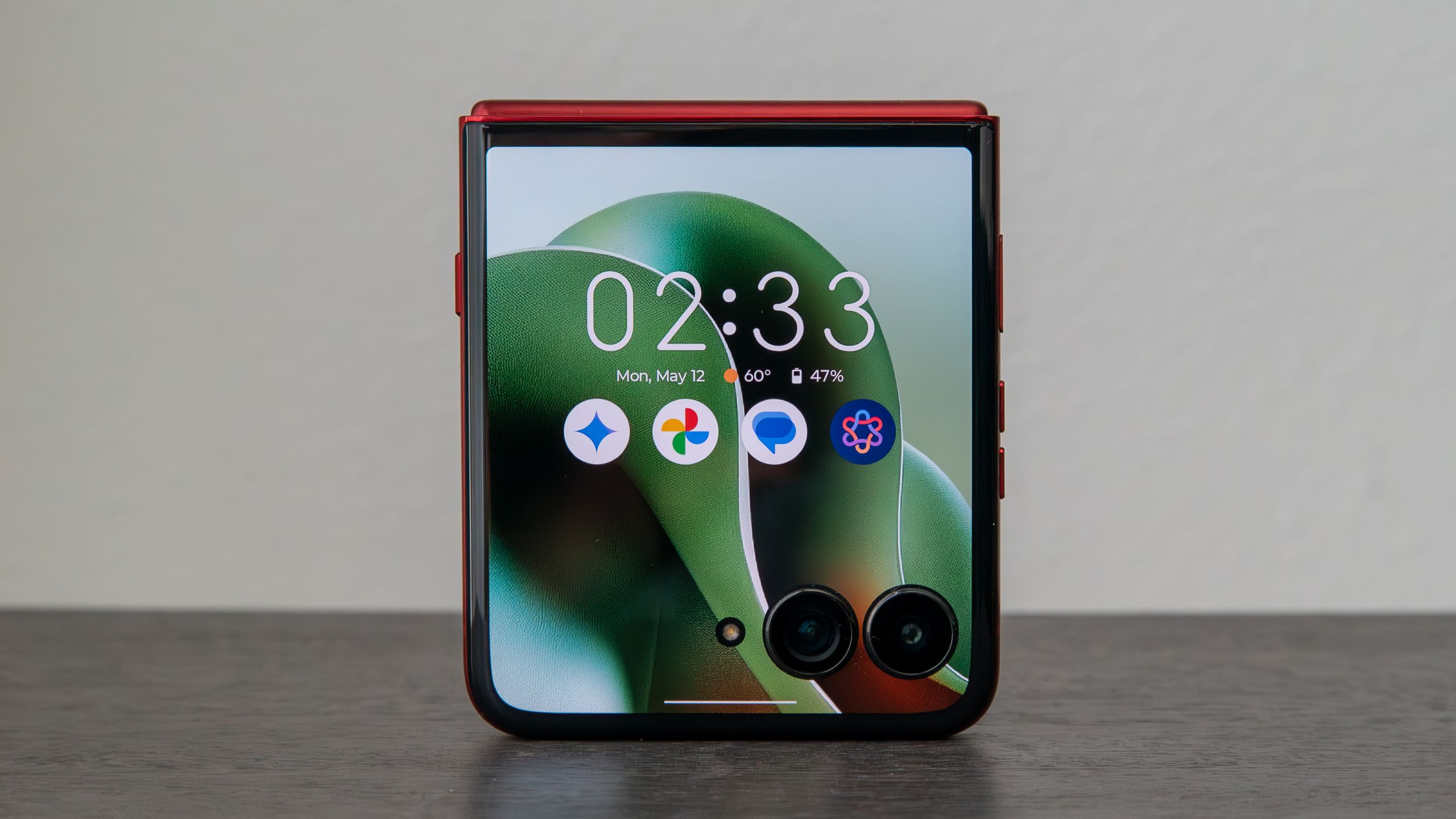
Local Tech Journalist Discovers Flip Phone Still Flips After 365 Days, Science Community Baffled
In what can only be described as the most rigorous durability test since someone left a Nokia 3310 in Chernobyl, Android Central's Nicholas Sutrich has spent an entire year using the Motorola Razr Ultra 2025 and lived to tell the tale. His shocking conclusion? The phone opens and closes repeatedly without spontaneously combusting or transforming into a very expensive coaster.
This revelation comes at a time when the tech industry desperately needed confirmation that folding phones can survive longer than a TikTok trend. Sutrich's year-long odyssey with Motorola's latest attempt to convince us that flip phones are cool again (they never stopped being cool, Gen Z just forgot) has yielded five earth-shattering insights that will forever change how we think about rectangles that become smaller rectangles.
The Razr Ultra 2025 represents Motorola's most ambitious entry into the "let's make phones complicated again" category, a market segment that Samsung has dominated with the subtlety of a hardware store during a natural disaster. While Samsung's Galaxy Z Flip series has been busy establishing itself as the unofficial phone of people who want everyone on the subway to know they can afford a $1,200 communications device, Motorola has been quietly perfecting the art of the nostalgic cash grab. The Ultra 2025 takes everything people loved about the original Razr from 2004 (the satisfying snap, the ability to hang up on people dramatically) and adds everything people love about modern smartphones (the ability to drain your bank account, planned obsolescence disguised as innovation).
Sutrich's first major revelation centers on the phone's hinge mechanism, which apparently continues to function even after months of use. This is particularly noteworthy in an era where phone manufacturers have trained us to expect catastrophic failure within warranty periods so precisely timed you'd think they hired Swiss watchmakers. The hinge, he reports, maintains its satisfying snap without developing the mechanical arthritis that plagued early folding phones. It's almost as if Motorola learned from watching Samsung's first-generation Galaxy Fold users become unwitting beta testers for what happens when you give people a $2,000 origami project with the structural integrity of wet cardboard.
The second insight involves the phone's cameras, which Sutrich describes as "surprisingly capable" for a device whose primary selling point is its ability to fold in half. This is the equivalent of being surprised that a sports car can actually go fast, but in the folding phone universe, functional cameras are apparently an unexpected bonus rather than a basic requirement. The Ultra 2025's camera system manages to produce images that look like they were taken with a phone from 2025 rather than 2005, which is more progress than we've seen from some manufacturers who shall remain nameless (but rhyme with "Schmassung's budget line").
Perhaps most remarkably, Sutrich discovered that the phone's battery actually lasts a full day of normal use. In the folding phone space, this achievement ranks somewhere between winning a Nobel Prize and successfully explaining cryptocurrency to your parents. Early flip phones suffered from battery life so poor they made gaming laptops look like solar panels. The fact that you can flip your phone open, use it like a regular person, and still have enough battery to call an Uber at the end of the night represents a quantum leap in portable power management.
The fourth takeaway focuses on software optimization, an area where folding phones traditionally go to die slower deaths than Internet Explorer. Motorola has apparently managed to create an Android experience that doesn't treat the flip form factor like a glitchy afterthought. This is significant because most folding phone software feels like it was designed by people who had flip phones described to them by someone who had only seen them in movies from the early 2000s. Apps actually adapt to the folded screen configuration without looking like they're having an existential crisis about their purpose in life.
Finally, Sutrich notes that the phone has maintained its structural integrity despite a year of daily folding, unfolding, and the occasional dramatic phone hang-up that flip phones enable and that we all secretly miss. The screen hasn't developed the telltale crease that makes other folding phones look like they've been pressed in a panini maker, and the overall build quality has held up to the rigors of pocket transportation, desk placement, and other extreme sports that modern phones must endure.
The reality check here is both simpler and more complex than Motorola's marketing department would have you believe. The Razr Ultra 2025 works as advertised, which in the folding phone category is roughly equivalent to achieving cold fusion. It's a genuinely usable device that happens to fold, rather than a folding gimmick that happens to occasionally function as a phone. For people who actually want a flip phone in 2024 (and there are more of you than tech Twitter wants to admit), it represents a viable option that won't leave you explaining to confused repair shop employees why your phone has a permanent crease down the middle.
But let's be honest about what this actually means for the rest of us: folding phones remain a solution in search of a problem that most people don't have. The Razr Ultra 2025 succeeding primarily proves that if you throw enough engineering talent and manufacturing precision at a fundamentally niche product category, you can make it work well enough to justify its existence. It's the technological equivalent of perfecting the art of making artisanal ice cubes, impressive and functional, but ultimately serving a market that consists mostly of people who want to feel special about their frozen water.
The phone costs more than most people's monthly rent, folds in half for reasons that remain philosophically unclear, and works exactly as intended. In 2024, that apparently counts as a minor miracle.